

Naomi Sharon is Wide Awake in Paradise
Our Paradise Issue cover star is romanticizing the grind and dreaming of stadiums. OVO's First Lady is the show. Pay attention.


It’s 2025 in sunny Los Angeles. Naomi Sharon isn’t sleeping, and she’s not trying to. She and Jordan Ullman, one half of Majid Jordan (and by now basically her creative twin), have been locked in the studio for five weeks straight, and the songs keep pouring out. Twenty of them.
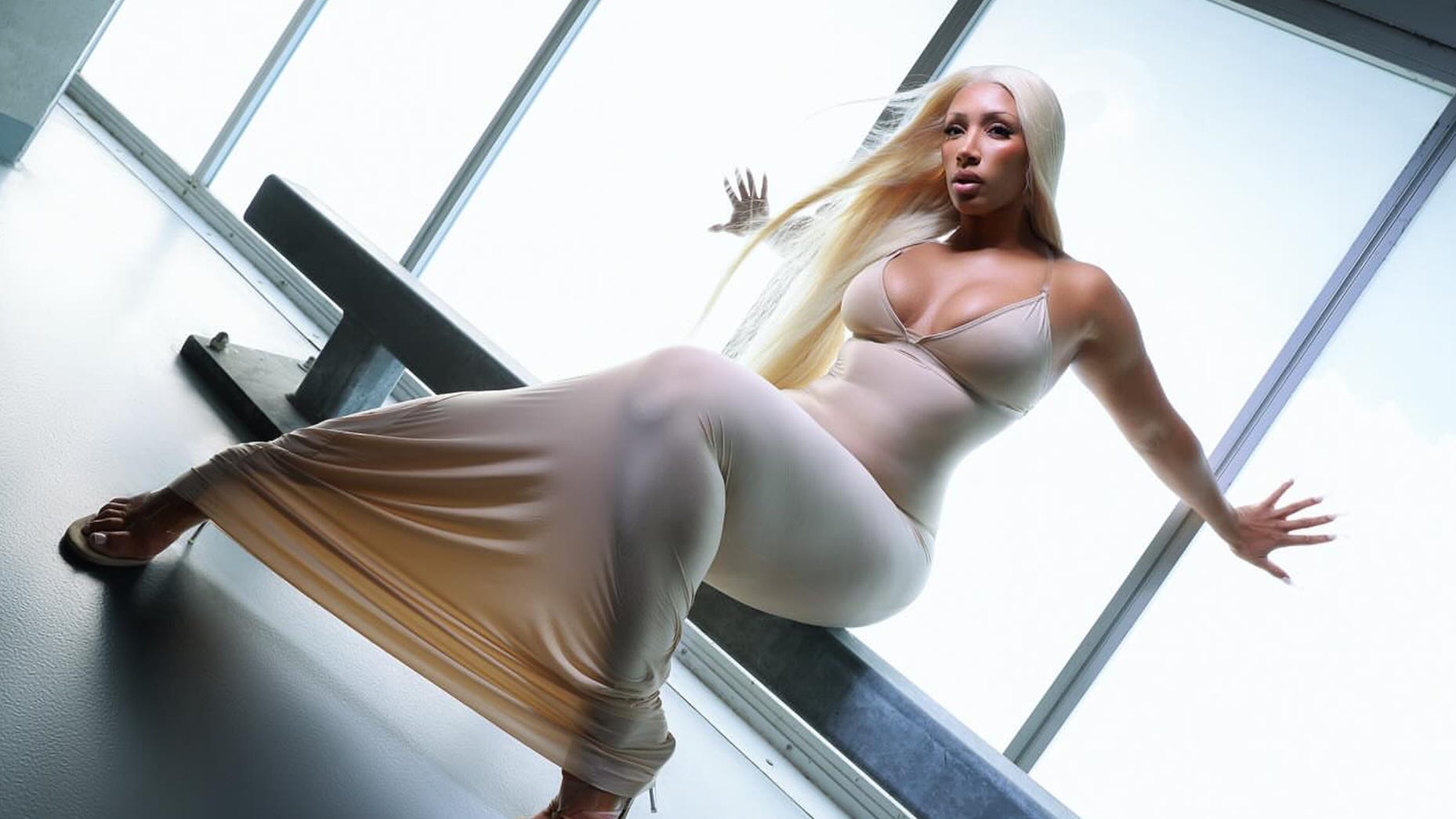
Nobody in the room is resting because nobody wants to. They’re high off the work itself. This is a city, she reminds me, where if you get sick, you just book an IV drip and keep it moving. She says it like a joke. It’s also a little bit of a warning. By the time the dust settles, she’s got a name for what the making of her latest album entailed: she was romanticizing being a workaholic.
That’s the album right there, tucked inside the process. No sleep in paradise.
But the grind is only half of Naomi, and honestly it’s the less interesting half. The other half is the part where she keeps signing up to be uncomfortable on purpose. Take “Light My Soul,” a song from the new album No Sleep In Paradise. She didn’t like it when it first came together. Too clean, too radio, “too mainstream for me,” she says, and you can still catch the tiny wince in her voice. Naomi came up on music she calls vibey, dark, and ambient, the kind of song you feel in your chest before you can even hum it, so a shiny pop thing felt wrong. Jordan walked her through it. She sat with it a little longer. “Okay, you’re right,” she told him, and now it’s one of her favorites on the record. She’s got a name for that whole sensation; the one where you make the thing that scares you and want to crawl out of your skin doing it. She calls it the ego death.
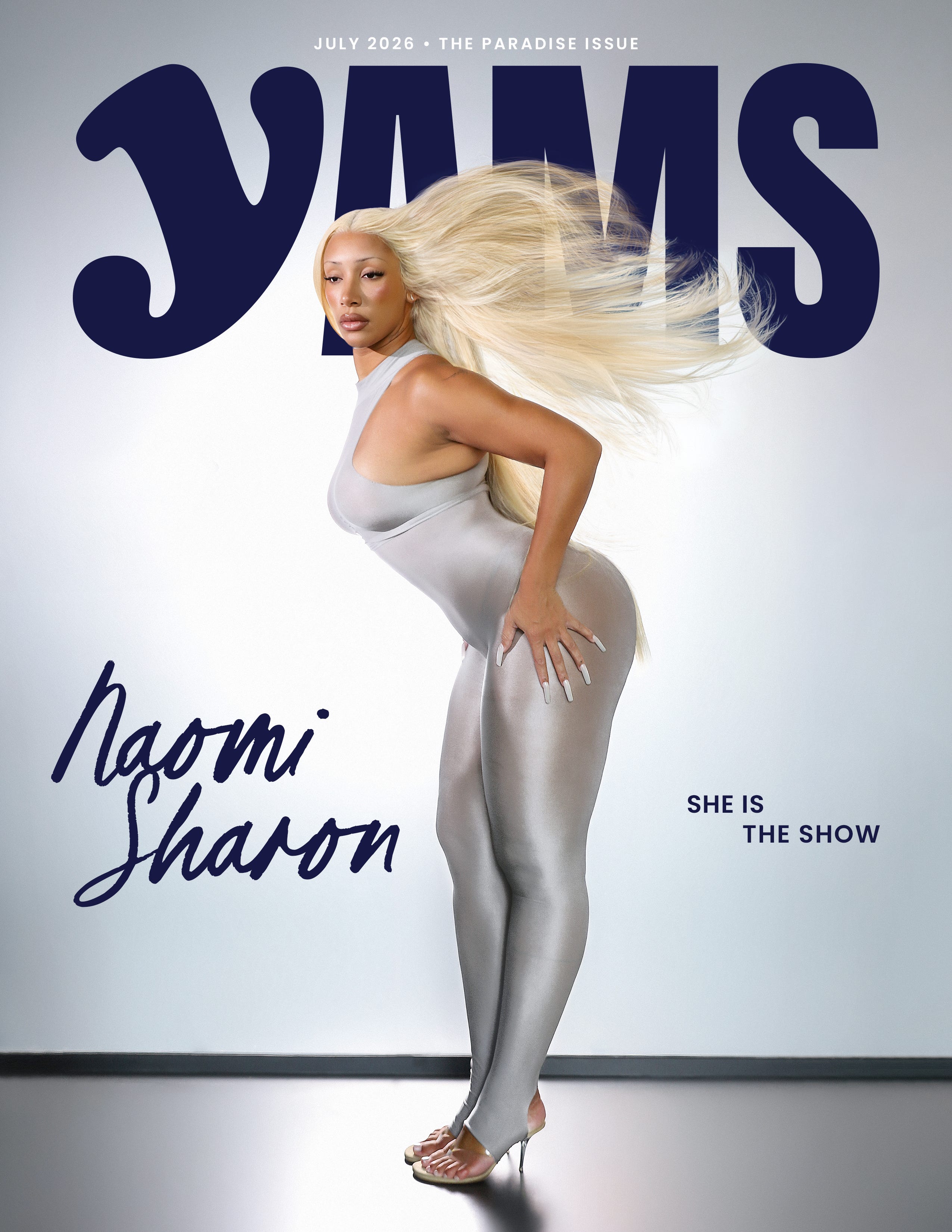
So let me put you on. The cool thing about Naomi Sharon isn’t just that she can sing, though my God can she. It’s that she walks straight at discomfort, the sleepless kind and the scared kind, and calls it paradise.
Refreshing, She Calls It
First, the new album is genuinely great, and I want to be specific about why. No Sleep in Paradise is her second, out now on OVO, and it follows a debut that critics and fans obsessed over. It’s lush. A little dystopian. Completely unbothered by the genre borders everyone else treats as law.
To understand how far she’s traveled, you have to know where she started sonically. Obsidian, back in 2023, was cinematic and hushed, alternative R&B laced with ambient house and little threads of Afrobeats and Spanish guitar, all of it built to frame that voice, the deep alto that had half the internet reaching for the same comparison. Sade. She’s heard it a thousand times. On No Sleep in Paradise, she does something sly with it. Instead of parking the voice out front and letting it do the heavy lifting, she tucks it into the groove and lets the low end lead more. There’s deep-house shimmer, there’s real soul, and running under all of it is this lounge-at-3-a.m. quality that turns out to matter way more than you’d expect (more on where that comes from in a sec). She built the thing to feel like “three different EPs almost,” and that’s exactly how it plays, drifting from ambient to mainstream-ready to stadium status without ever once stopping being her.
I ask her to describe her own sound, and she doesn’t reach for a genre. She says “refreshing,” then hits you with a challenge. “Who is just R&B nowadays? Even Drake, he raps, but a lot of his songs are pop.” She’s tired of the strict boxes, basically. “We’re so opinionated sometimes,” she says. “Even when I’m dropping something that has more genres on it than just R&B, people think I’m just R&B.” This album is her rebuttal; an expanded palette.
“Try,” the Kaytranada collab, is the one I’ve had on repeat this week. She’s known him for years, ran in the same circles. Somehow, they never talked about music until they finally got in a room last year, and it clicked, Naomi and songwriter Blush chasing it down while Jordan sat in. His fingerprints are all over the groove, and it’s the loosest she has ever sounded, which is saying a lot for a singer whose early reputation was built on control. Then there’s “Miss That,” the dance record, the “this-is-a-new-Naomi” moment, and she knows it. There’s the music video where she’s dancing like a pro, which leads to a small, funny thing she volunteers up. For years, she performed in latex dresses she could barely walk in. On her recent tour run opening for Doja Cat, she essentially decided she needed to be able to move on stage and brought on two dancers. “Try” is now her favorite thing to do onstage.
And then there’s “No Sleep in Paradise” itself, the song where the record quietly says the thing out loud. It reads like an insomnia song, but the insomnia is only the symptom. The city’s asleep, and she’s not. The room clocks the fire coming off her, and still nobody actually sees her. The higher she climbs, the less the ground underneath fits. That’s the whole dystopia tucked inside such a pretty title. Paradise, and she can’t sleep in it. Once you hear how the album was actually made, it sounds less like a complaint and more like a confession.
A Mini Toronto With Turntables
So where does that rooftop-lounge-at-3-a.m. thing come from? Rotterdam, mostly. And a dad with turntables.
Naomi Sharon Webster was born in Rotterdam to an Aruban father and a Dutch mother, which means the Caribbean and the North Sea have been fighting for the aux in her head her entire life. She grew up in what she describes as a micro Toronto or New York, industrial and urban and stacked with culture, and above all with what she keeps calling talent development. Her high school let you pick a theater class or an art class your very first year. The city, in her words, “kind of allowed me to do whatever I wanted.” And early on, she wanted all of it. She was a serious track-and-field kid, convinced she was headed to the Olympics, until theater got its hooks in her.

Her home was musical in a way that creates taste at an early age. Her cousin did musical theater. Her mom sings. Her dad DJ’d: “a producer first, and a writer.” He put her on to deep house and lounge music, Buddha-Bar, Café del Mar, and that zen is still the water she swims in. It’s why she works with Alex Lustig. It’s why her records breathe. Underneath all of it sits a broad palette she rattles off when I ask about influences: Tina Turner, Whitney, Stevie, Sting, Eva Cassidy, Babyface, Richard Bona. World music. Everything, honestly.
By four years old, she was lip-syncing Stevie Wonder with zero English, “making up my own type of English,” she laughs, comparing it to Simlish. She picked up the language partly through the music, watching TV in the original audio with Dutch subtitles running under it. Before she knew what the words meant, she already knew what they were supposed to feel like.
The Ensemble Was Never the Full Plan
You do not get to Naomi Sharon, the recording artist, without going through Naomi Sharon, the theatre performer. Before OVO, she spent years on Dutch stages, deep in the machinery of musical theater. Three years in The Lion King, playing Shenzi, eight shows a week. Dreamgirls. Later, Tina. She even did a run on The Voice of Holland early on, an experience she’s since described as the thing that taught her she wasn’t ready yet, that she was so busy panicking about whether the coaches would turn their chairs that she forgot to actually be present.
Somewhere in there, she went through vocal surgery, and the way she tells it, recovery cracked something open. If she was going to do something with real stakes for her own body and her own health, she decided, it had to be a decision she made for herself, not one a theater company made for her. That’s the seed of everything that follows.
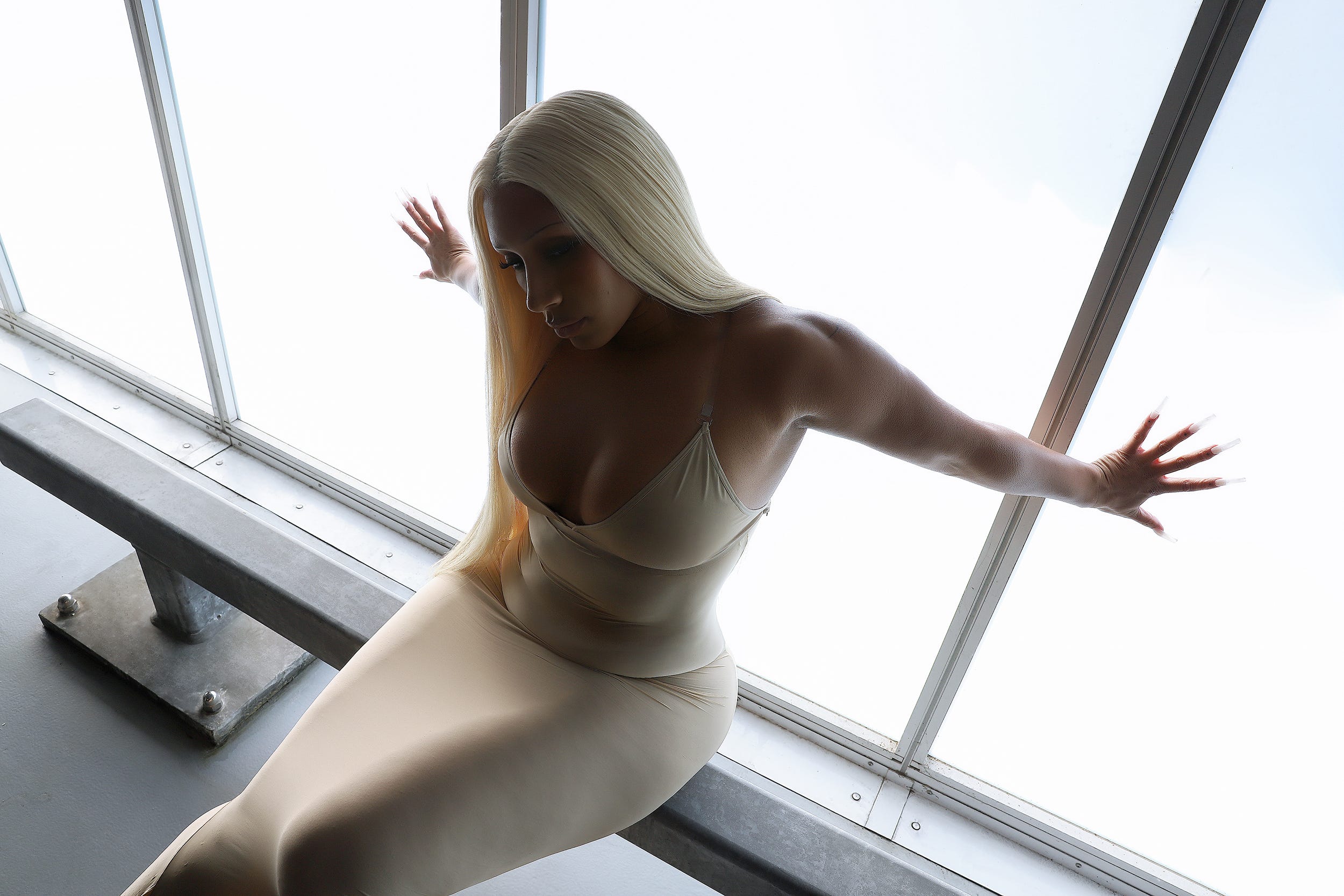
For the longest time, she assumed making your own music meant you needed a record label and permission. Then she found out you didn’t. She dropped her first song in 2019, made it in GarageBand on her phone, took it into a studio to get it done properly, and dropped it independently.
“I was kind of done with working for a company,” she tells me. “If I wanna work, I wanna do it for myself.” Then comes the line she immediately worries sounds arrogant, but it’s just honest truth. “I saw myself much bigger. I was part of something, and I wanted to have a show that was about me. You don’t wanna be part of an ensemble. You wanna tell your story.” She’s quick to add that her theater years were beautiful, that she learned a ton, but you can feel how big that decision was. She walked away from something safe to go build something unfinished. But something that was hers.
First Lady of OVO
The OVO chapter is the part everyone already knows, so I’ll keep it moving and let the details do the work. She drops her first single in 2019 independently, and Drake finds it and messages her. It was a track called “Breeze” that caught his ear, and as she’s recounted it elsewhere, she was standing in a Zara when the message came through, certain it couldn’t possibly be real. He wrote back within a few hours, wanting to hop on a call. She stayed tapped in with his camp, and the deal became official at the top of 2023, making her the first woman ever signed to OVO. When he announced it, Drake framed it as the world finally getting to see the work she’d been quietly putting in since they met.
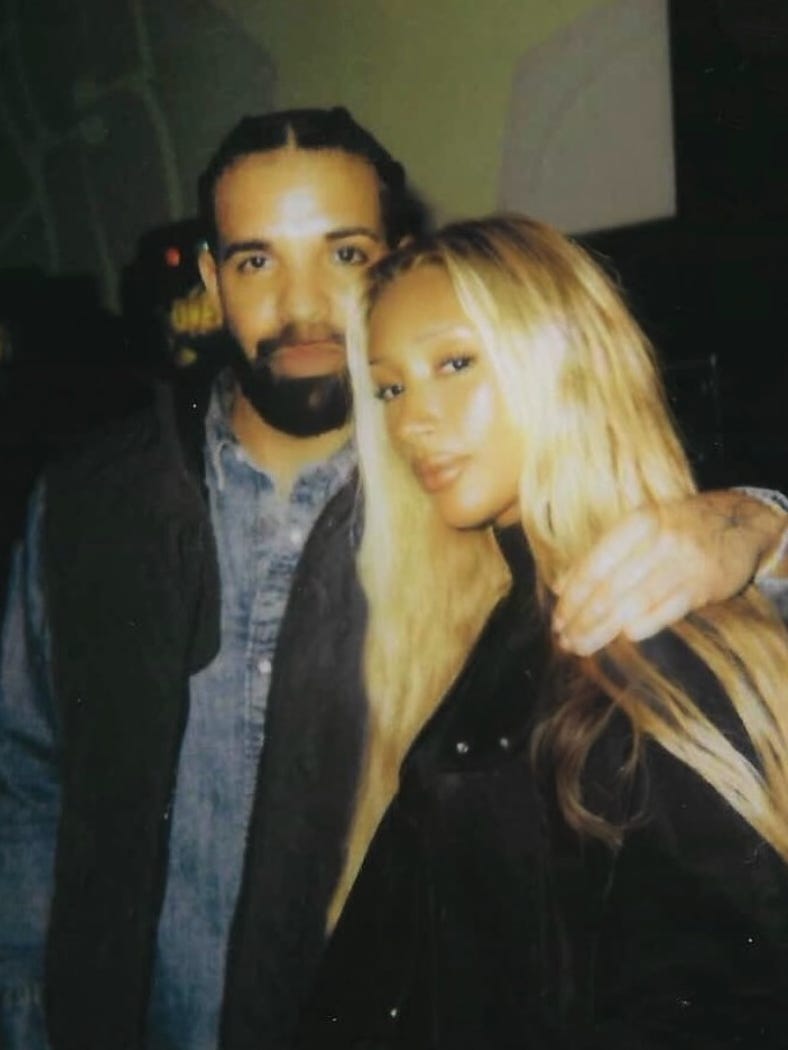
She refuses to treat it like a lottery ticket, which I love. To her, it read like a receipt. “A confirmation of the hard work I put in,” she says. She talks about the Instagram grind especially, the years of building an image and an aesthetic and the whole visible-artist project, because, as she puts it, “nowadays we find each other on social media.”
And once she was inside, the freedom is what actually moved her. Noah “40” Shebib, the architect of the entire OVO sound, she describes as a kind of wizard, someone who never pushed her in a direction so much as pointed at things and let her choose. She brought her own producers into the fold, and met people like Alex Lustig through the label. But the relationship that reshaped her music is Jordan (of Majod Jordan). The first time they got in a room together, they made “Waiting For You” in twenty minutes.
“To find that on your own label is very special,” she says. They work like “one brain” now, sometimes talking it out, sometimes just doing. She calls it a softening, which is such a good word for it, because this is an industry she loves that also grinds you down, and she’s hard on herself, and here’s a room where she gets to be vulnerable and have fun and stop performing being okay. Most of No Sleep in Paradise came straight out of that room.
Obsidian
If you’re only meeting Naomi now, do yourself a favor and go back to Obsidian, released October 2023, because it’s where the shape of her whole approach snaps into focus. The album is named after the stone. She’s told the story before: she was wearing an obsidian necklace and felt it get heavier as the day went on, like it was absorbing the bad energy around her, and she loved that an object could confront you like that, could sit you down in your own discomfort. Rebirth, confrontation, healing. Those were the assignments. In our conversation, she puts it plainer. “The difference with me is that I just write about it,” she says. “I put songs out about it.” That’s the whole deal she’s got with her audience. The diary stays open. “Life is very real right now. I find music very healing.”
That ego death she keeps chasing on the new record? It has a prequel. On Obsidian, it was Drake himself who nudged her out of her musical comfort zone and toward something more uptempo, and she’s admitted it scared her at the time; leaving that lane felt like leaving safety. She trusted it because she figured he heard something real. That leap gave us “Push,” the Omah Lay collaboration built on a Nineteen85 beat, one of the brightest things she’d done to that point. The discomfort is the tell that she’s growing.
In 2025 she dropped an EP, The Only Love We Know, and described it as lighter, carrying the energy of moving forward, of showing more of herself. Her words: on Obsidian she was “kind of hiding.” Read that against the woman on No Sleep in Paradise who’s dancing in the “Miss That” video and singing about being wide awake in her own success, and you can watch her unhide in real time, project by project. She opened for Tems in that stretch too, another room full of strangers to win over, another rep in the gym. Nothing about the arc is accidental. She has been methodically, stubbornly turning the volume up on herself for years.
She Is the Show
The commanding presence that Naomi Sharon has, the aura on record and the command onstage, is mostly theater. Eight shows a week for years will build it into your bones. “You get so used to performing, and to failing,” she says. The nerves are always about the wrong note, the dropped ball. Theater taught her to just pick it back up and keep going, to improvise through the mess. She’ll walk offstage and flatly call it “shit,” her word, and mean it, and also have had the time of her life. Both at once. Always both. That’s the muscle that most singers may never build.
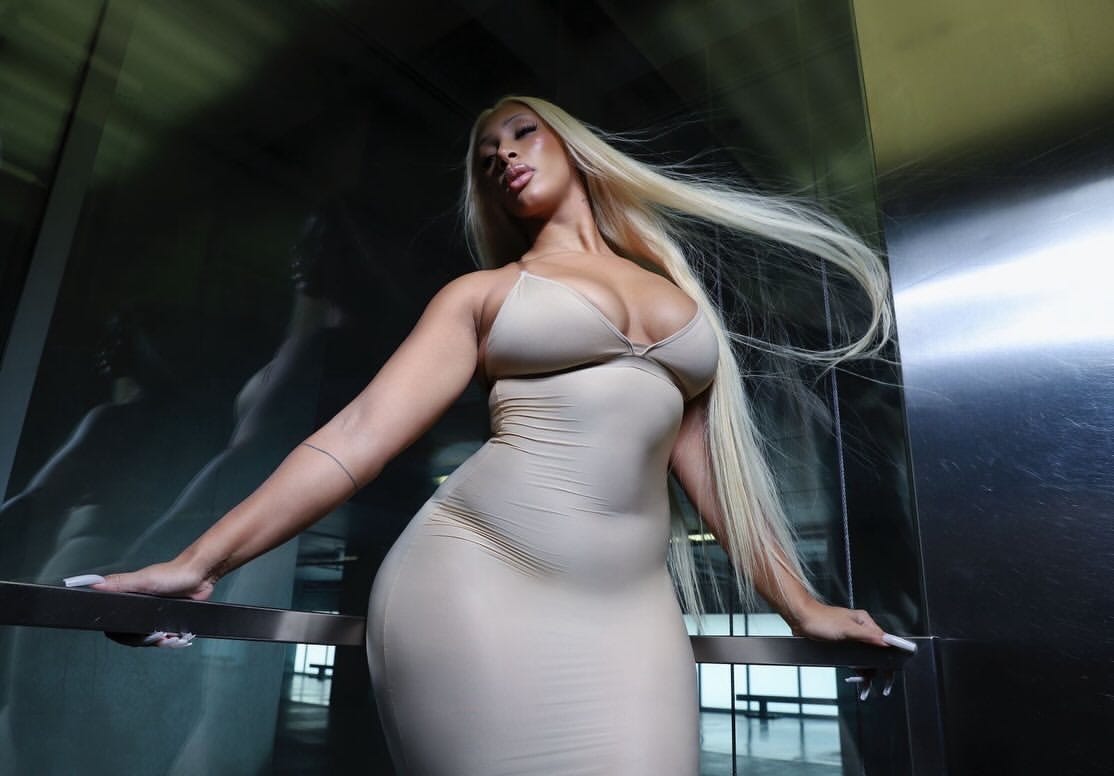
Which is exactly why she comes most alive in our whole conversation talking about Doja Cat, whose European run she just opened. She calls it her TED Talk, affectionately. She’d finish her own set, decompress, then head up to catch the last thirty minutes of Doja every night, studying. What floored her was that Doja was pulling off the stuff Naomi learned in theater school, carrying an arena with a band and backing vocals and no dancers, just being the show. On her own off nights, Naomi would watch Doja find energy in anything – a fan, a bit with the mic – and yank the entire room back. “She is the show,” Naomi says, half in awe. You get the feeling she’s describing a mountain she fully plans to climb.
Greedy, in a Healthy Way
Which is where all of this lands. She wants the arena. She says it flat out, and I love her for how little she pretends otherwise.

The Doja tour was a challenge, winning over rooms full of people who didn’t know a single song of hers. Her own No Sleep in Paradise tour, kicking off in September, she calls “a warm bath.” Her people. Her music. The high of watching a crowd lock into a song in real time. And she’s hungry for what’s next in a way she refuses to apologize for. “I’m kind of greedy for the success I want,” she says. “In a healthy way.” The small rooms are done for her. She’s had a taste of the arena air. “I’m kinda spoiled,” she admits. “So I have to work harder to get there.”
I told her the music already sounds like it belongs up there, that “Another Life” and “Definition of Love” sounded stadium-sized the first time they hit my ears. She lit up. Singing “Another Life” in an arena, she said, felt exactly as big as she’d hoped. “Let’s work and manifest.”
What she wants from you, in the end, isn’t worship. It’s patience. “I’m gonna make more albums. I’m not gonna do it in the same lane every time.” You don’t have to love wherever she goes next. “But it would be nice if people would respect the journey.” That’s the ask. Follow the artist, not just the song.
No sleep in paradise. She’s fine with that. She’s romanticizing the whole thing on purpose, and after talking with her for an hour, honestly? So am I.
Loved everything about this piece, very well written 🙌🏾 I found Naomi from Bitterswet, and going to go back to Obsidian. This experience feels very similar to when I discovered Snoh Aalegra for the first time :)