

India Shawn Is In Her Groove
Our Groove Issue cover star is ready for her moment to shine. And she's been ready.


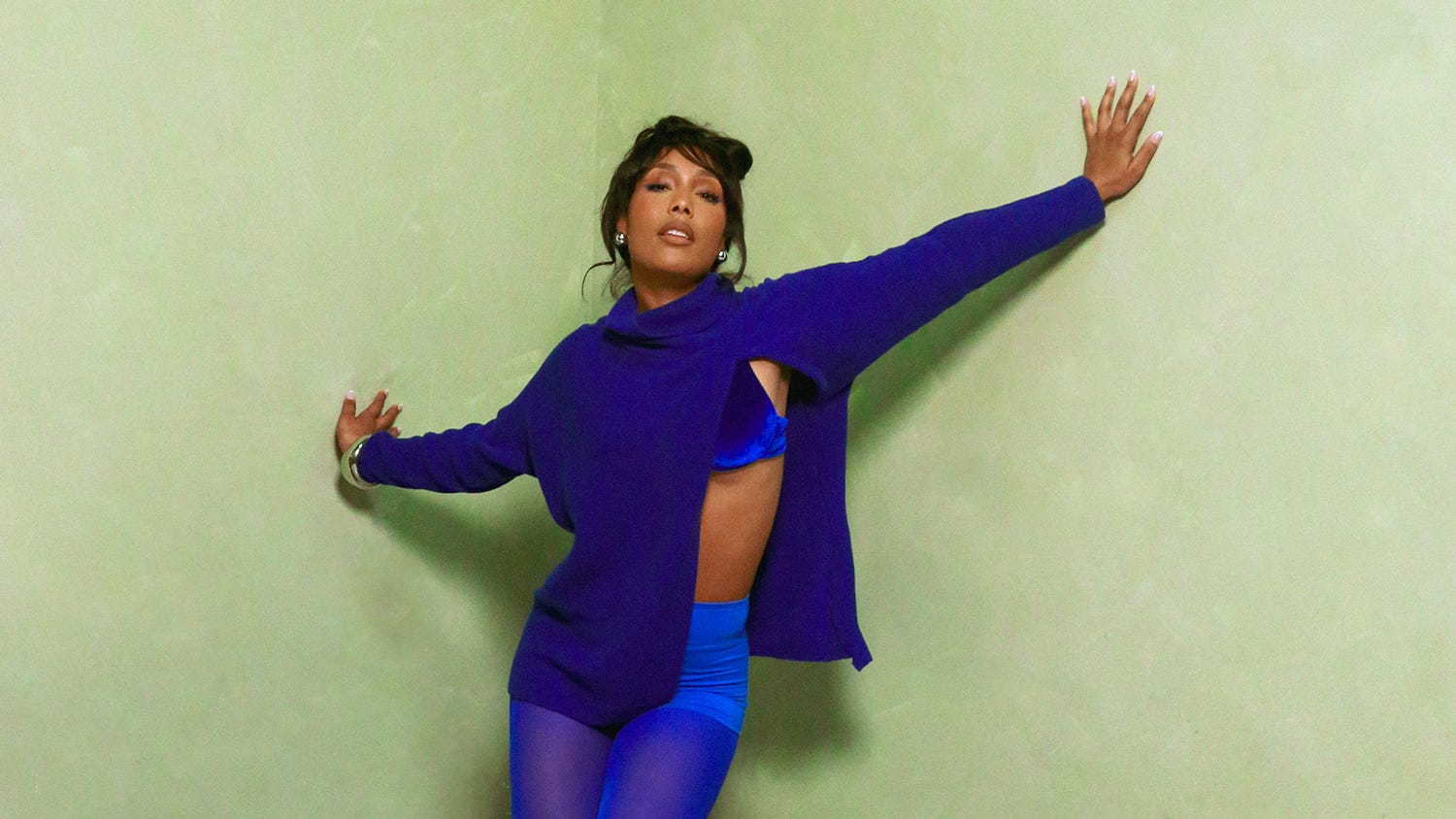
India Shawn says that she keeps coming back to this particular Rick Rubin quote: “Don’t play to win, play to play.” She drops it mid-conversation, in the way you mention something that has rearranged a thought you’ve been carrying for years. It stuck with her because she’d been doing the opposite for so long — grinding towards a goal, trying to break through, measuring the music against the moment it was supposed to produce. Subject To Change, her new EP via VANTA Music, is what happened when she started playing to play.
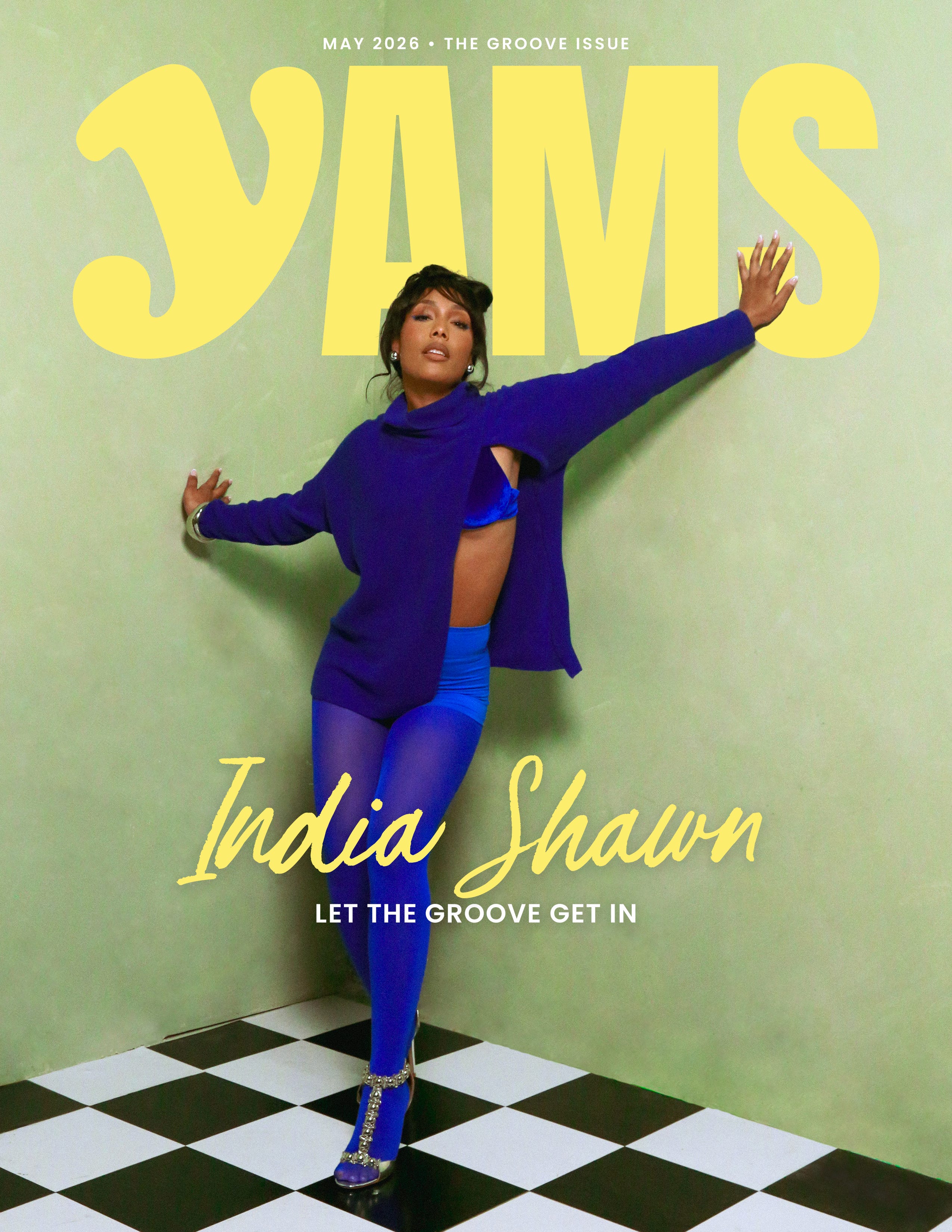
She’s unhurried when we talk, leaning back like someone who stopped checking the clock a while ago. There’s a specific kind of ease that comes from having nothing to prove to anyone – and India has that. And it makes sense once you know the road she’s traveled to get here. Writing songs for artists like Chris Brown, Monica, and Keri Hilson. Singing background for Anderson .Paak on the Best Teef In The Game tour. Working as a vocalist with Harry Styles during his Harry’s House era. The resumé goes on.
India’s voice has threaded into the mix so naturally that you may not have caught it unless you already knew to listen for her. She has been, for a long time, one of those artists that the music industry and R&B fans love quietly — the kind they keep calling “an artist’s artist” or a “slept on fave.” IYKYK. And it’s true, but it also doesn’t pay nearly enough.
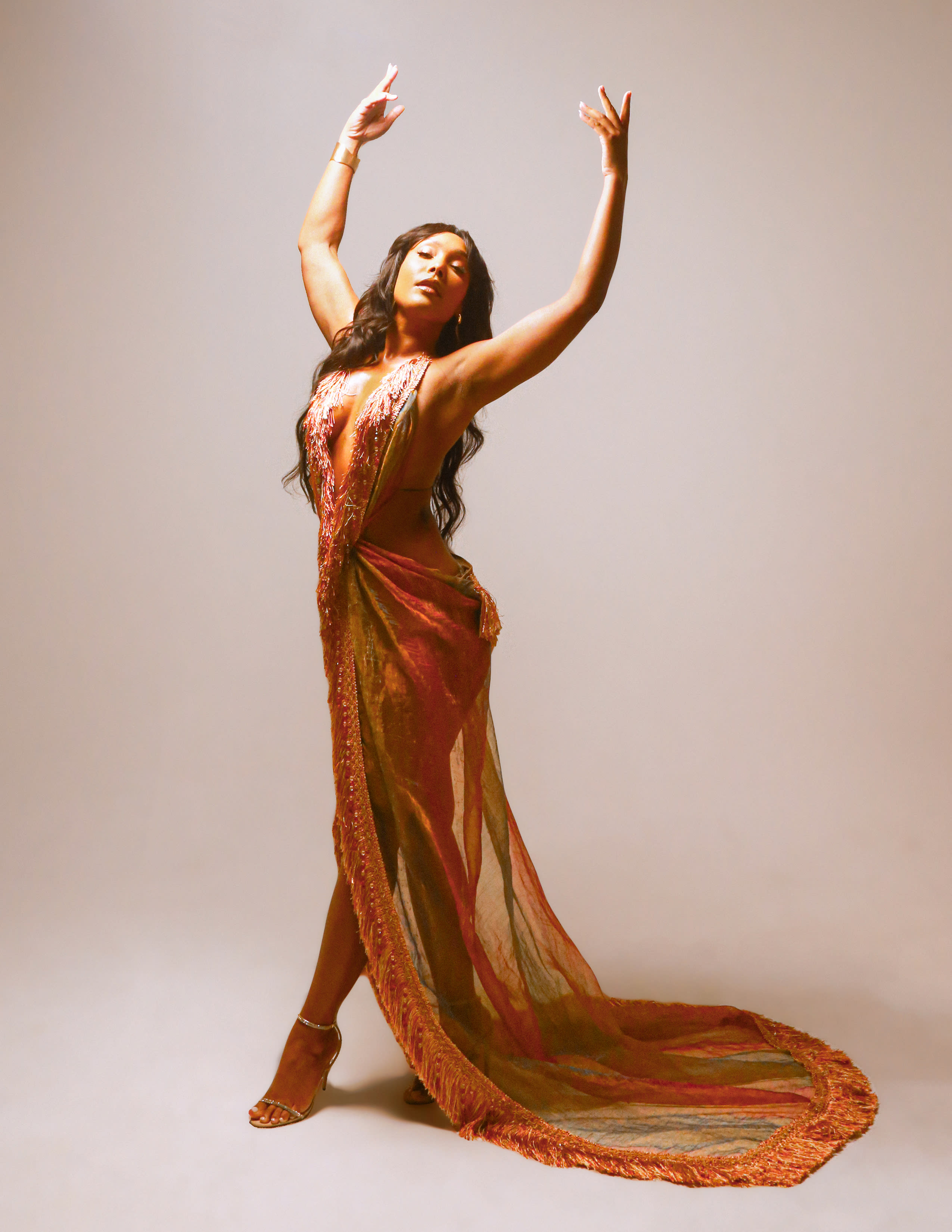
Her latest project, ‘Subject To Change,’ is out now, and it hits hard. Six tracks. Every one of them sounds like an intentional decision she made for herself. The quiet chapter is over.
“I got out of the passenger seat. I said, let me make what I want to make, in all aspects.”
India’s Origin Story
She grew up in Los Angeles, with her mother as the praise and worship leader at their church. That’s where she learned to sing — not just the technical part, but the part that matters: how to mean it. When her family moved to Atlanta during high school, she carried that foundation into a city that was on its way to becoming the center of the musical universe. Atlanta gave her the work ethic, the network, and a new community of writers and producers. Everybody was figuring it out at the same time. She talks about that era with a warmth that means it impacted her greatly. “I feel like I really became a musical professional in Atlanta,” she says. “And now I’ve taken everything I’ve learned, and I’m back in LA. The environment of LA is felt in my music.”
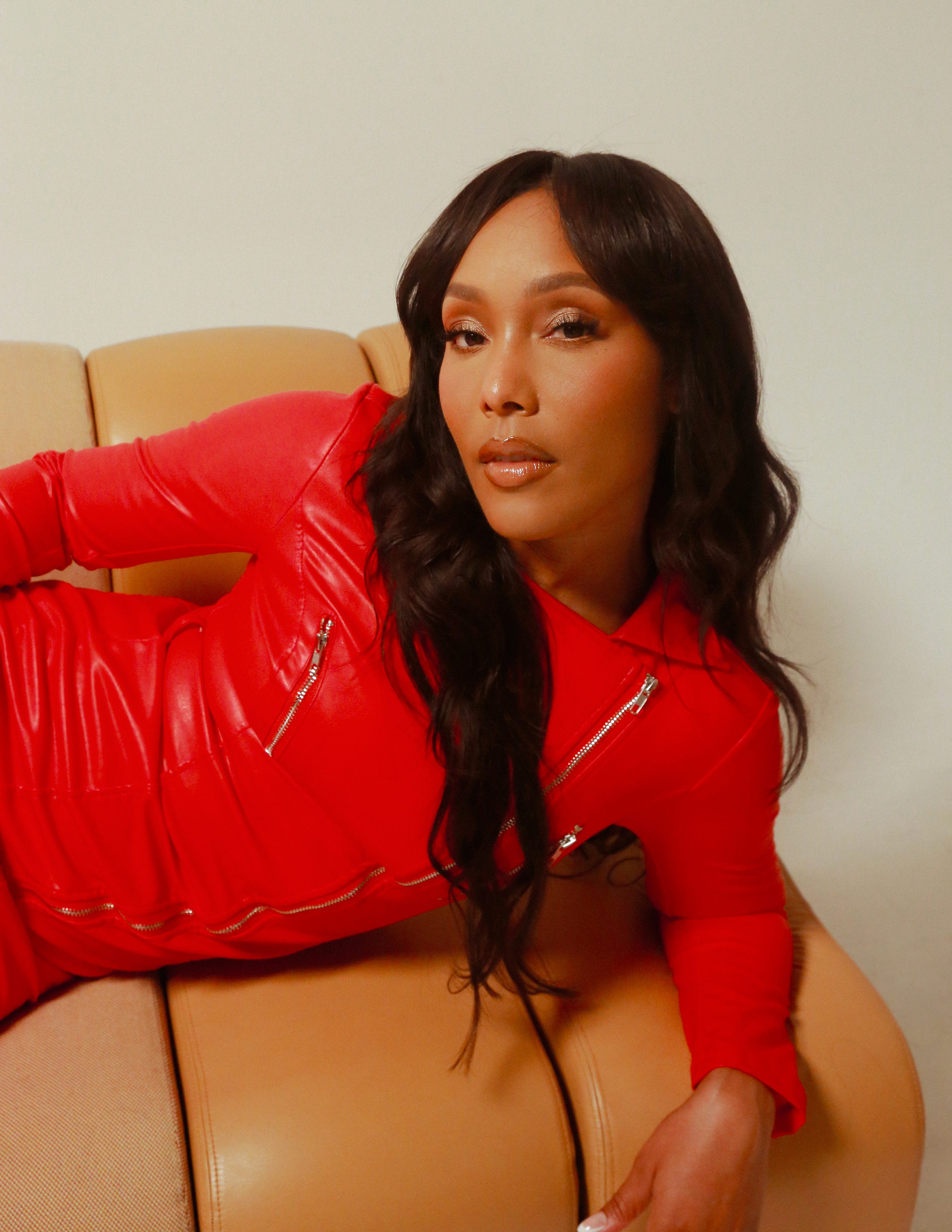
Before Origin, her debut project, she wrote for others as part of a collective called Full Circle. She was good at it — placing plenty of songs and building a real working reputation in the industry. But writing for someone else means learning to disappear into their vision, and after long enough, that starts to feel like a trade that you didn’t fully agree to.
“Writing for others just affirmed that I wanted to write for myself,” she says. “I was providing a service in that era, and I just wanted to love what I was making. I wanted it to mean something to me. And then when I wrote those songs that meant something to me, I wanted to keep them for myself.”
So in 2012, she did. Origin arrived independently — ten tracks, with star musicians like Hit-Boy and James Fauntleroy in her corner. So if you were paying attention from jump, you know India was somebody to take seriously. The project found its people the slow way, through word of mouth and genuine feeling. Songs like “All I Have” and “Neither Do We” have that quality that the best early records have: they sound like someone telling you the truth before they knew anyone was listening. Her day ones have held those records close for over a decade. They bring them up unprompted – feeling personally responsible for introducing them and India to the world.
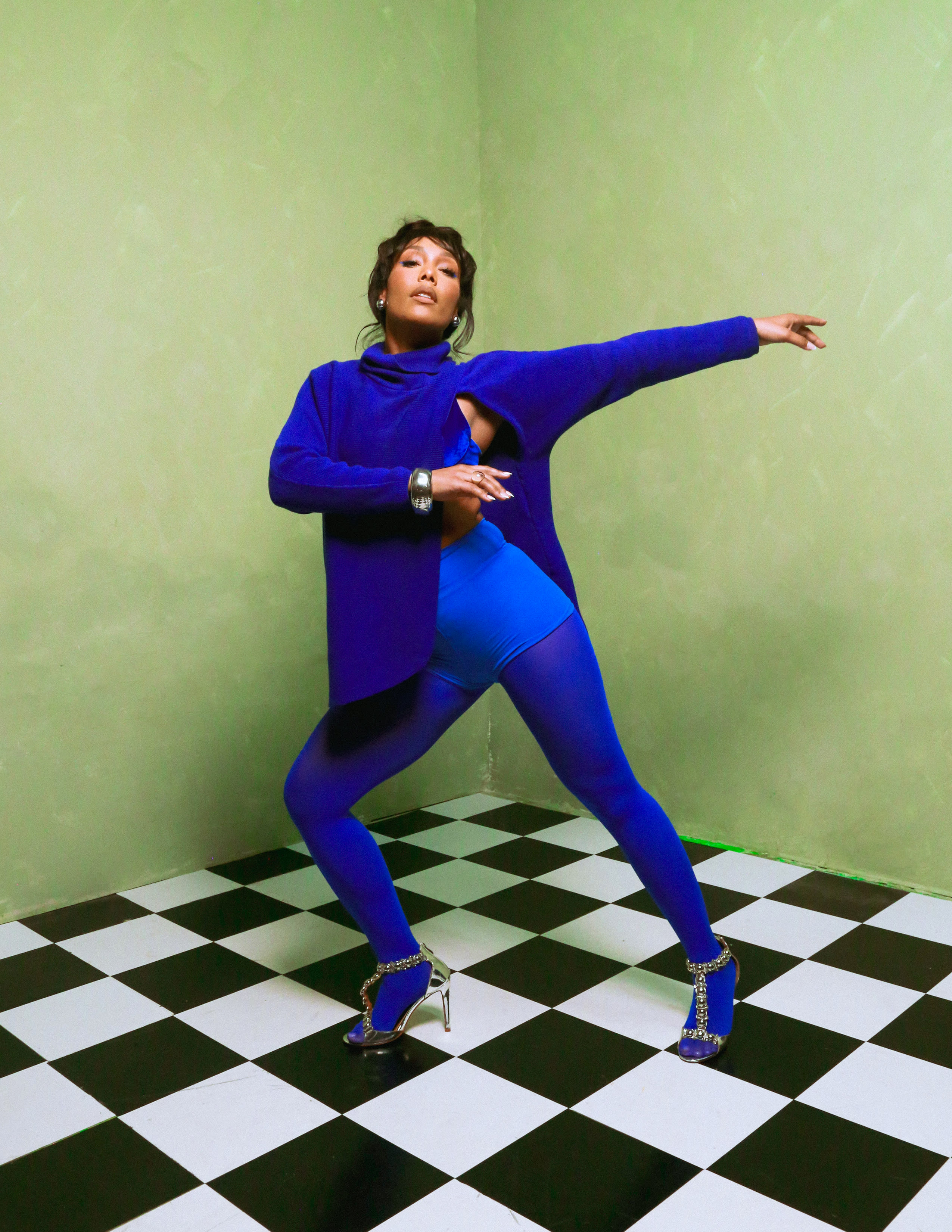
“That’s one of my favorite albums of mine. I think it’s a classic. I think it is me at the core.” She pauses. “If [fans] have been with me from the beginning, they see the growth. They also see that I’m the same girl in a lot of ways.”
She is. That’s the thing you notice sitting across from her. Whatever India Shawn has been becoming, she has been becoming it for a long time.
Playing The Long Game
In 2013, Solange put India’s “I’m Alive” on her Saint Heron compilation project — a co-sign from someone who appreciated the interesting thing before the interesting thing had a name. In 2015, she released ‘Outer Limits,’ her collaborative EP with James Fauntleroy. The EP mapped out a cosmic, unhurried version of alternative R&B that made it feel like trends didn’t matter. There was touring with Free Nationals, a Grammy performance with Harry Styles, and Anderson .Paak’s whole tour circuit…India was, and still is, booked and busy. She was everywhere serious music was happening, even when her name wasn’t the one on the marquee.
What kept her going, she says, was the people.
“Someone recently asked me how I get through humps of writer’s block or creative blocks. I think collaboration has been key for me. You don’t stop. You just find the people that can help you push it forward.”
She mentions 6LACK, Anderson .Paak, and then arrives at the name that changes the whole shape of the convo: D’Mile. “D’Mile has been everything. He’s such a creative support in helping me to shape my sound and discover new sounds I want to explore.” She says working with D’Mile has been a safe space for her: to experiment, to fail, to have fun. And that’s rare for women in the industry.
“I always tell him – if it wasn’t for him, I probably wouldn’t still be singing.”
She lets that sit. It’s not a dramatic statement — it’s a practical one. What D’Mile, whose VANTA Music label she is now signed to, has built with India isn’t just a production partnership. It’s a room where she could fail without it costing anything, where the work could be fun again. “It’s been the perfect situation,” she says. “He just makes it so easy to show up.”
D’Mile describes his approach simply: he listens. “Even before we start working, if we’re in the room just talking, I’m starting to think — is that a song?” he says to me in a conversation via Google Meet. “I try to really get to know whoever it is I’m working with.” With India, that familiarity has compounded over the years. “In some ways, it gets easier and easier to hear the music in her personality.”
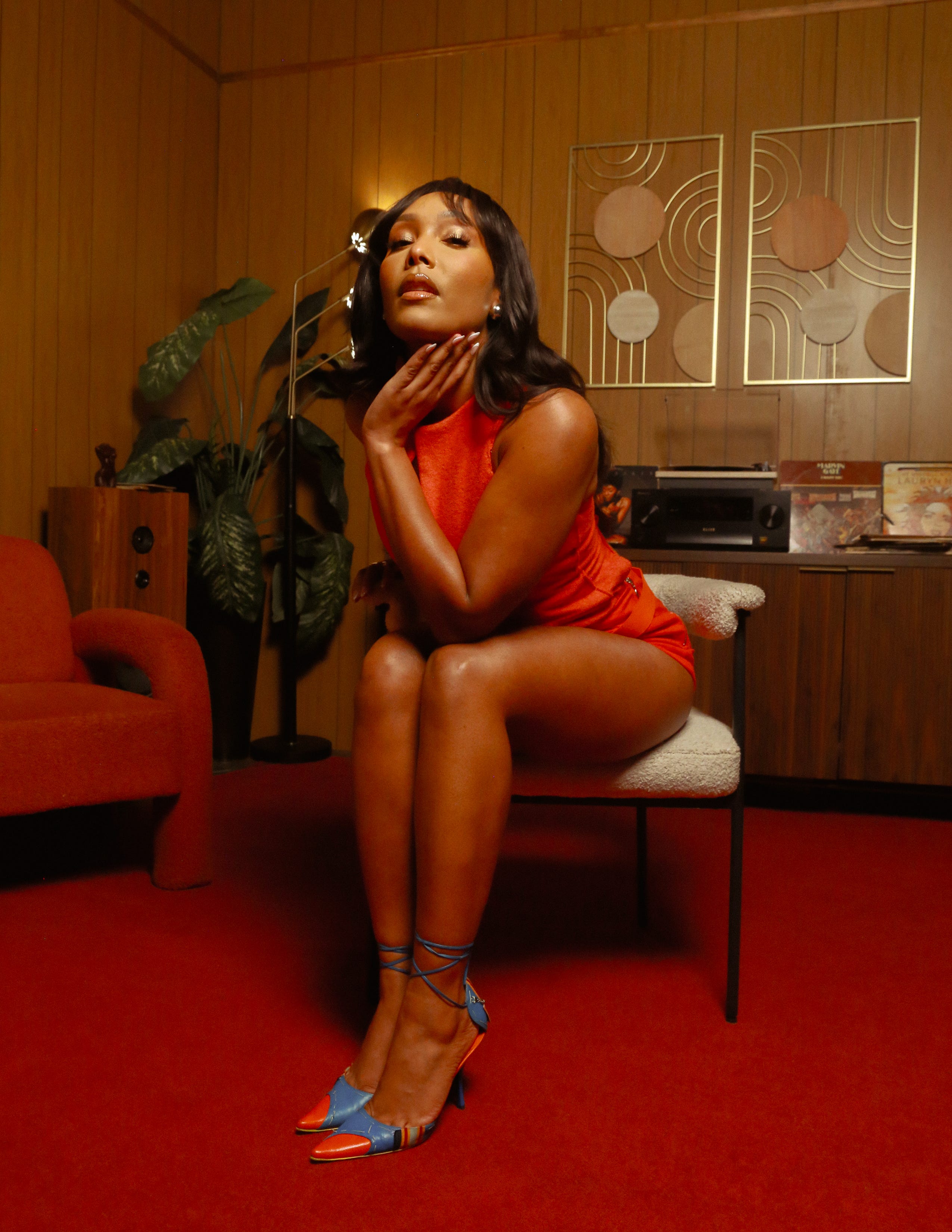
To me, there are certain artists that I know instantly after hearing for the first time that they belong at the upper echelons of the “industry.” They deserve the budgets, the visuals, the awards, the fanfare. India Shawn has always been one of those people to me, though it’s been a long grind to get to the moment we’re at now.
I asked D’Mile why he thinks that is.
“I think for a while, timing wasn’t fair for Black artists doing R&B unless you were also doing EDM or pop,” he says. “People were also just set on who they loved at that time.” We both agree that the streaming era has allowed consumers to expand their palates and not rely on being told who’s hot by radio DJs or popular figureheads (like we’ve seen in decades past).
But something was shifting underneath all of it. D’Mile points to a specific moment he felt the ground move. “One of the things that started making me realize it was time for real music to come back was Childish Gambino’s ‘Redbone,” he says. That was a moment where R&B and soul music weren’t just being accepted again — they felt needed. The window that India had been patient enough to wait for had finally started to open.
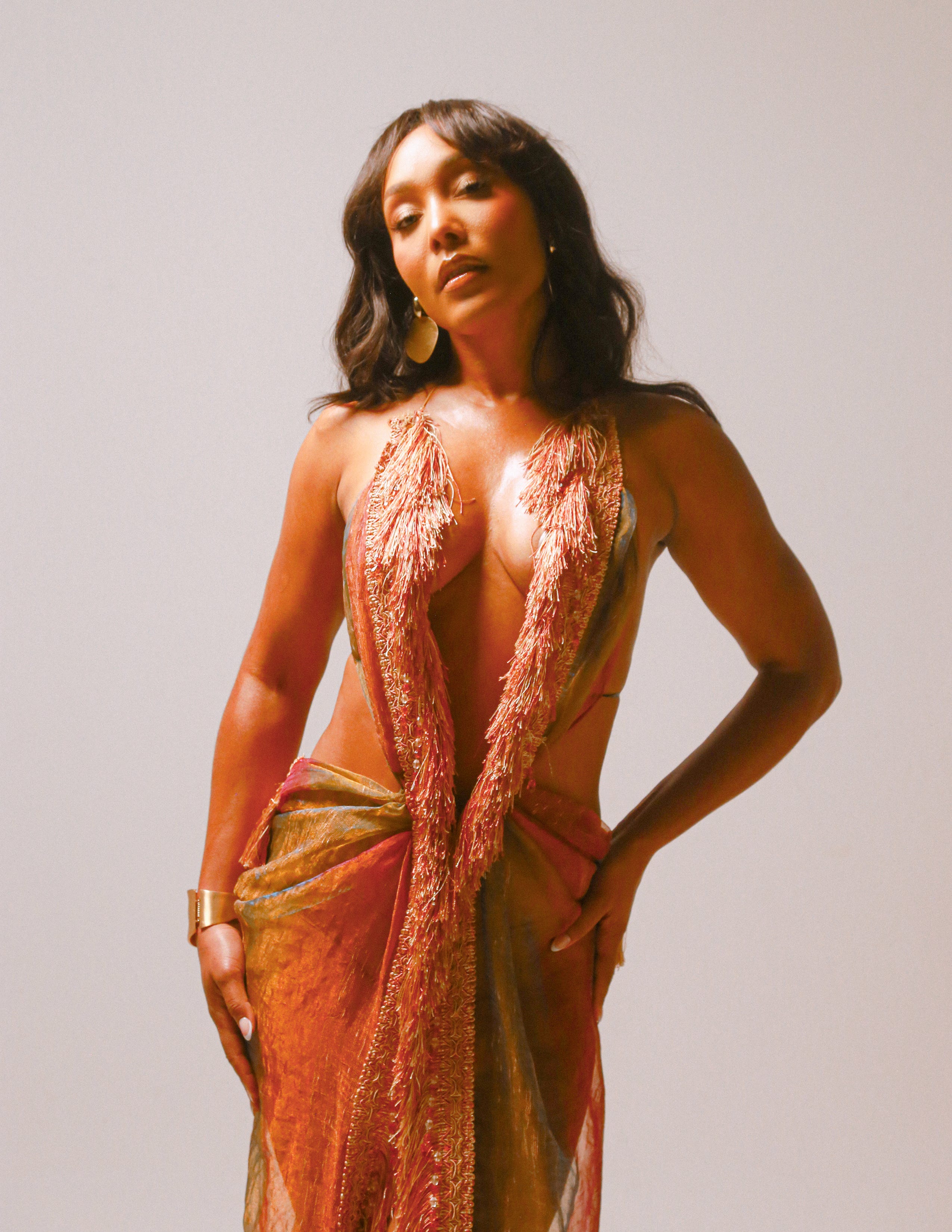
Before We Go (Deeper), her 2022 project on Epic Records, was a full expression of that — with Anderson .Paak, 6LACK, Ambré, Cory Henry, and Unknown Mortal Orchestra as features, with India’s voice at the center of it all. The album got the attention it deserved from the people who knew.
She’s not bitter about the time it took. She’s also not going to pretend it didn’t sting. She made great music. The moment wasn’t ready. She kept making great music anyway.
Everything Is Subject To Change
The new EP Subject To Change started with a playlist. India sat down and pulled together everything she actually loved, and listened until she could hear what was missing from her own music. Then she brought it to D’Mile and the label. “This is what I’m chasing.”
“I wasn’t hearing it in my music,” she says. “Because I was still very much doing what people expected of me, or just what was easy to do.”
“Kill Switch” came out of that session of honesty — though not without some coaxing. D’Mile had brought in two members of Mamalarky, an alternative band whose sound he’d been drawn to, and when he walked into the studio, they were already noodling with an idea. “I think India that day kind of didn’t even want to go there,” D’Mile recalls. “She wanted to do something different. But I think she just couldn’t hear it yet.” He heard it. They stayed with it. India came back the next day with her collaborator Varren Wade, and the first lyric that came to her mind (the chorus) told them exactly what the song should be about.
“It just flowed,” D’Mile says. “Whether it took a day or two, it felt easy throughout.” The final record has D’Mile on drums, Livvy from Marmalarky on guitars, and Michael on keys — a full live session that you can feel in how the song breathes.
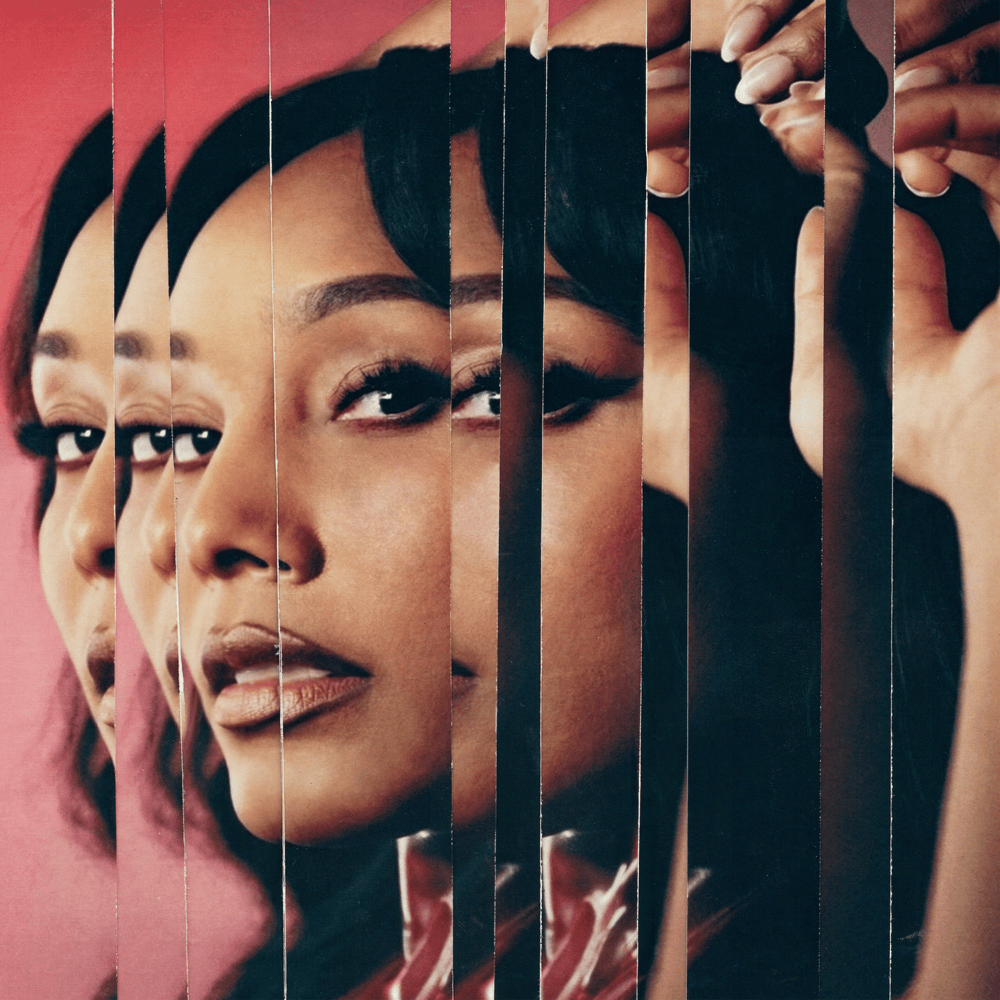
The song opens on acoustic guitar before dropping into a psychedelic soul-rock pocket. A groove that doesn’t announce itself, it just arrives, builds, and crashes into greatness. India’s voice sits in the center of immediately amazing lyrics. It’s about the moment before something changes between two people — recognizing the pull and choosing not to cross the line, protecting what’s real over what’s possible. A specific feeling rendered with great care. Exactly what India Shawn has always been best at.
“Kill Switch is definitely probably my favorite on the project,” she says — and the “definitely probably” is worth noting. It’s exactly how she talks; loose and precise at the same time. D’Mile agrees. I agree. “It was one of the first ones we finished and felt really, really good about.”
“Cotton Candy Blvd.” is an instant standout for its slow-burning, groovy nature. India and Lucky Daye trade verses and vocals like they’ve been doing this for years. Fans have been asking for this collaboration out loud for a while, and the record rewards their wait. You can hear the pleasure and the fun in it.
“The song is sweet, but it’s got depth. It’s the tension before the kiss, the invitation and the promise.”
The rest of the EP earns its range. “Marmalade” kicks things off as Track #1, and it’s the one that gets bodies moving — 70s warmth and dancefloor intimacy. “Til Infinity” makes me feel like I’m driving through California on a 75-degree day with blue skies and birds chirping. “Multiplicity” closes the project on a more complicated note, a sharper accounting of what it costs when someone wants too much of you. The EP covers real emotional ground without rushing any of it.
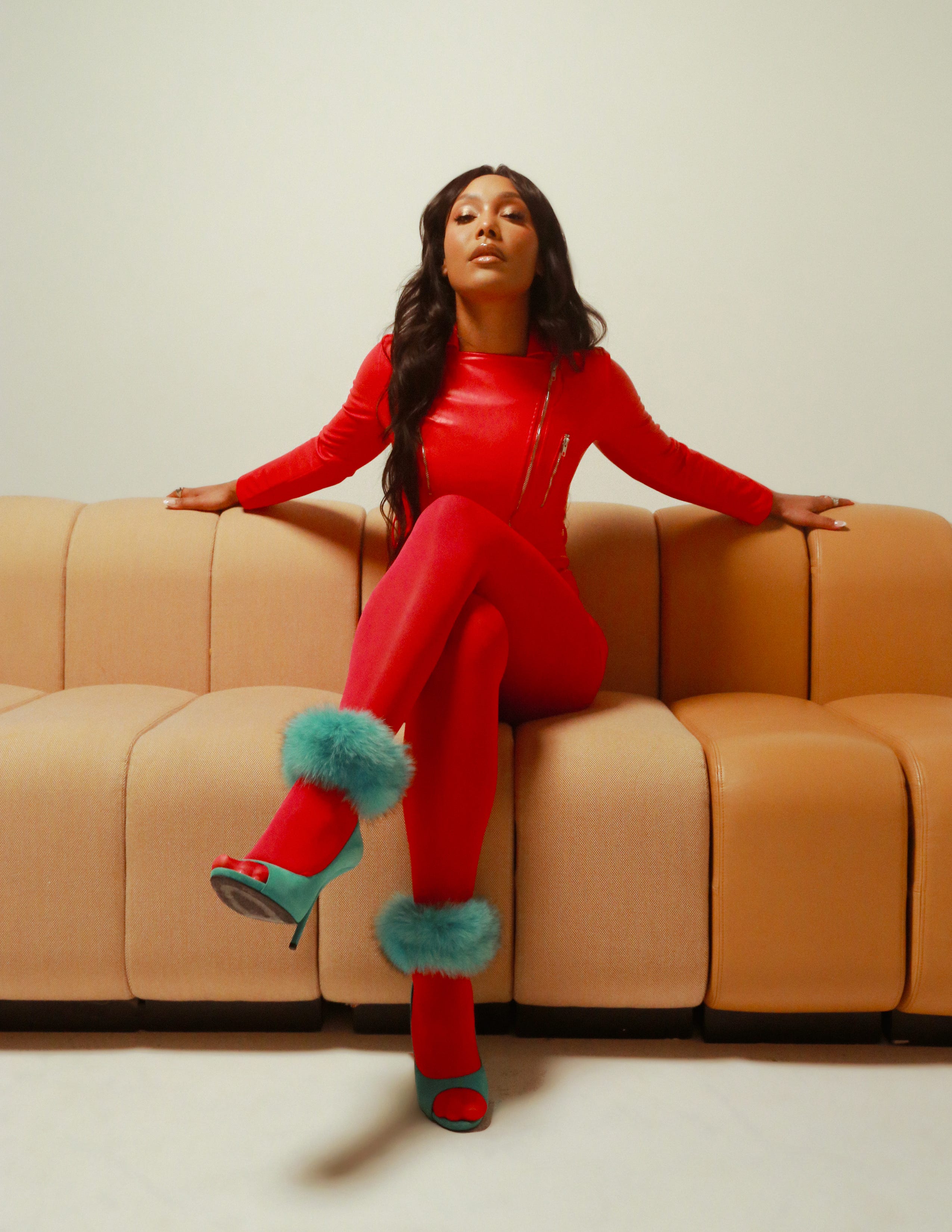
“I have been so hard on myself,” she says, “pushing toward a goal, wanting to win, wanting to break through — that I haven’t really had as much fun as I wanted to have.” Something lands in her face when she says it, less like a confession and more like a fact she’s done fighting. “Subject To Change is a lot of different sounds and emotions. It’s an experiment. And it is the first time I really played.”
She’s not playing to win. She’s playing to play. Word to Rick Rubin.
And that’s the thing about this EP that I love — you can actually hear someone who’s just making something they loved. It’s a different sound. Looser. More alive. Groovy, for lack of better adjectives.
Let The Groove Get In
Near the end of our conversation, I tell India that we’re calling this The Groove Issue. “I love that,” she says immediately. Then, after a beat: “First of all, I hear groovy music. Bops and jams.” She smiles. “But also, it feels like I’ve found this comfortable place in my career. And we’re definitely giving ‘70s, so — it’s groovy.”
D’Mile, for his part as label exec-producer-friend, wants people to see what he’s watched happen up close. “For the fans from day one, I want them to see the growth she’s had over the years,” he says. “The fact that she is still doing it. She’s not quitting.” He pauses. “She’s different from the person I knew, but in the best way!”

India Shawn has never been a mystery. The same artist who made “Be Myself” in 2012 made “Kill Switch” in 2025 — same instincts, same honesty, same refusal to make music that doesn’t mean something to her first. What changed isn’t who she is. It’s that she stopped leaving room for anyone else’s version of that.
On our way out, she mentions offhandedly that she’s been listening to a lot of 1970s soul lately — Minnie Riperton, Syreeta, the stuff that takes its time. “Music that trusts you to stay with it,” she says. So with that being said, let the groove get in.
Credits:
Writer + Creative Director – Dante Nicholas
Photographer – Breyona Holt
Stylist – Cedes Sanders
Hair – thedimeeffect_
Makeup – CHERIEBEAUTY
Video Director – Jai Casso
This is so good🔥🔥