

Da Future From Da Bassment
How DeVante Swing's Da Bassment Cru created the bridge between Gospel and modern-day R&B.


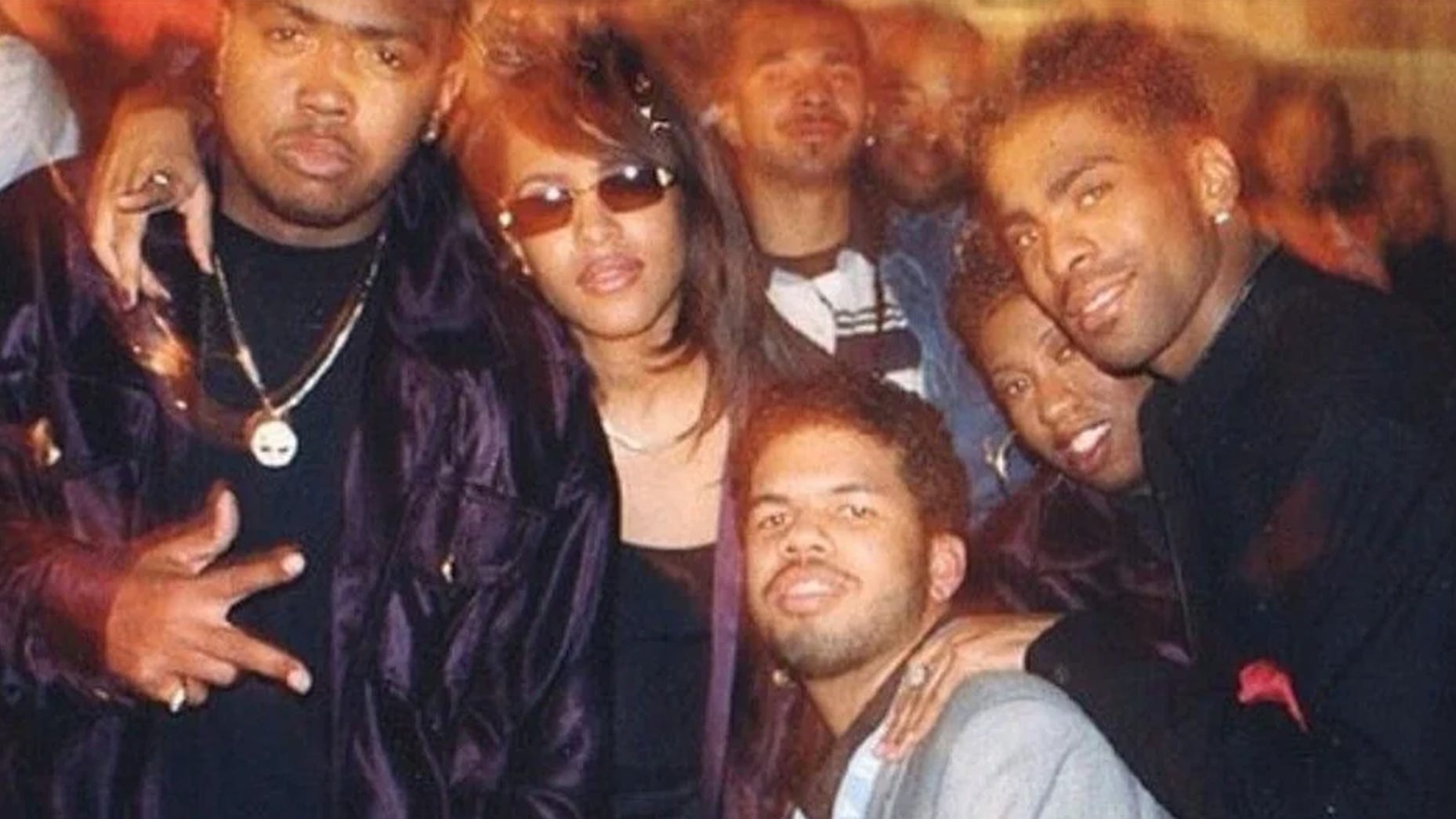
“You who dwell in the gardens, the companions listen for your voice; let me hear it!” – Song Of Solomon 8:13
I. Da Faith
Can you hear it? This is the sound of a man playing an instrument that he’s mastered since he was sixteen years old; self-taught, a musical prodigy, the latest in a long line of artists involved in a practice that many have likened to heresy.
The Song Of Solomon is an outlier in the Bible. In a part of the text that is best known for its terrifying miracles and violent retribution, comes a section tailored with tenderness, an extended poem dipped in double entendre, blurring the line between the sacred and the sacrilegious, the profane and the profound, the ecstatic and the erotic.
It’s a tradition that has been carried into popular music for over a century. Think of Al Green and Aretha Franklin, Sam Cooke and Whitney Houston, Tina Turner and Marvin Gaye, Prince: divided souls accused of having split loyalties between gospel and R&B.

This is the legacy that two sibling pairings fell into. The first pair (Donald “DeVante Swing” DeGrate Jr. and Dalvin “Mr. Dalvin” DeGrate) were a couple of preacher’s kids who went down a path that their father left behind. Meanwhile, the second pair (Cedric “K-Ci” Hailey and Joel “Jojo” Hailey) hailed from a tribe so talented that, outside of the Winans and the Clarks, could possibly be considered as the gospel equivalent of the Jackson family. Together, the world would come to know this band of brothers as Jodeci.
II. Da Fame
Following the release of their first album ‘Forever My Lady’ in 1991, Jodeci started touring all around the country, enjoying the perks of being newfound celebrities. However, after every performance, they would hang out backstage and hold auditions to invite equally-talented, like-minded individuals to their crew.
One of the first people to benefit from this initiative was a young Melissa “Missy Misdemeanor” Elliott as part of an all-girl group called Fayze (later renamed as Sista). Unwilling to leave her people behind, Missy brought Timbaland & Magoo along as a packaged deal.
After that was Ginuwine, Sugah (which consisted of Susan Weems, Rolita White, and a teenage Charlene Keys who would later be known as Tweet), as well as Stevie J and Playa (which consisted of Smoke E. Diggelera, Digital Black, and a gifted singer/songwriter in Static Major).
This would form the core of the “Swing Mob”, along with soulful singers such as Renee Anderson and Virginia Williams, plus underrated R&B producers like Chad “Dr. Ceuss” Elliott (no relation) and Darryl Pearson.
By 1993, you could already hear some of this creative collective’s contributions on Jodeci’s 1993 sophomore release ‘Diary Of A Mad Band’ with Chad and Darryl co-producing a few tracks while Missy and Timbaland occasionally operated as background features.
However, it wouldn’t be until 1994 that DeVante Swing would move his mob from a house in Teaneck, New Jersey, to a studio/apartment complex in Rochester, New York.
III. Da Funk
Similar to how The Dungeon Family was formed from the red clay of Rico Wade’s Georgia basement, the “Swing Mob” was christened underground as “Da Bassment Cru” by the bass of some thumping subwoofers installed inside a renovated church vault. A melodic crucible where its inhabitants did nothing but eat, drink, and sleep music.
With DeVante bankrolling this whole endeavor, his vision was to create a record label that was synonymous with a specific type of sound: Stax, Philadelphia International, Motown. If everybody played their cards right, then the basement of Dajhelon recording studio would be the modern R&B equivalent of 1520 Sedgwick Avenue.
From the little that (officially) came out of these sessions, you could see DeVante’s dream closely becoming a reality. Da Bassment is where Missy honed the skills that would carry her to both the Songwriters and Rock & Roll Halls of Fame. Da Bassment is where Timbaland refined his drum pattern and experimented with a variety of different sounds that would usher in a new sonic future. Da Bassment is where Ginuwine, Tweet, and Static Major would learn from the best on how to become their own stars.
H-Town’s “Part Time Lover” was made in Da Bassment. Jodeci’s “Freek’n You” was made in Da Bassment. Ginuwine’s all-time strip club and baby-making anthem “Pony” was made in Da Bassment. Although, it would be that song, in particular, which would lead several members of Da Bassment Cru to sprout up from the underground and discover a different route.
IV. Da Fall
Like several figures in the Bible, the fall of Da Bassment was precipitated by at least one of the three P’s: pride, power and paranoia.
While there have been interviews with several members of Da Bassment Cru talking about where it all went wrong, Sugah’s Susan Weems seems to provide the most detailed account during her conversation with Njs4ever.com.
It can, arguably, be traced to two events: (i) Jodeci’s tour with Bad Boy in 1995 and (ii) the arrival of Suge Knight.
Although everyone seemed to have a positive experience on the tour, the success of Bad Boy artists like The Notorious B.I.G. and Faith Evans made it starkly apparent to Da Bassment Cru that (outside of a couple placements on a few movie soundtracks) they had almost nothing to show for all their ingenuity and hard work. It was also the moment when other music industry executives took notice of the sheer amount of talent within the group and started picking their favorites (such as Ginuwine, who was able to sign a record deal with Sony/550 Music based off what they heard on “Pony”).
Simultaneously, the arrival of Suge Knight signaled a noticeable shift in DeVante’s behavior, as well as allegations of a hostile and toxic working environment (as colorfully described by Stevie J during an episode of Drink Champs). Others, however, would attribute the character change to a violent robbery DeVante experienced roughly around the same time.
Nonetheless, the camaraderie that once held the crew together gradually seemed to dissipate which led to several members disappearing one-by-one. First was Sista, who were said to have been dropped by DeVante after Elektra shelved their debut (4 All The Sistas Around Da World). Next was Ginuwine who, as mentioned above, left on his own accord. Then it was Timbaland & Magoo and Playa a few years after that (signing directly with Def Soul instead of through DeVante’s production company).
Sugah was one of the last original members to leave (around the year 2000), but their contributions would later prove to be the most consequential.
V. Da Friends
A demo tape. That was all that remained from Timbaland and Missy Elliott’s time in Da Bassment. However, that was all they would need to find the person who would change their lives: Aaliyah.
After the traumatic experience and ensuing scandal that arose from the creation of her first album, ‘Age Ain’t Nothing But A Number,’ Aaliyah was in search of a new direction. Something completely different, something that she could call her own.
In comes entertainment lawyer Louise West, who sent Aaliyah’s team a copy of Da Bassment’s demo tape with Sugah’s “Sugah & Spice” being the last track. When you hear the song, it’s easy to understand why Aaliyah gravitated towards it and how it became the template for her ground-breaking second album ‘One In A Million’: the laid-back, almost G-Funk-like beat; the playful innuendos that betray the inhibitions of an innocent heart.
Out of the ashes of Da Bassment came the rise of the “Superfriends” and the foundations of the modern R&B landscape. While we didn’t get the next Motown, we got something very close. We got Missy Elliott bringing in Afrofuturism with an inflatable black bodysuit. We got Timbaland populating tracks with cricket noises and baby coos. We got classic records from Tweet, Ginuwine, Playa and Magoo.
For almost a decade, the Superfriends ruled the airwaves, dominated the TV screen, and played a significant part in what many consider to be the last golden age of R&B.
Unfortunately, it felt all too brief with the sudden and tragic death of Aaliyah, the gradual decline of labels like Goldmind and Blackground, as well as the typical in-fighting that occurs after years working together in a highly stressful and volatile industry.
But, as the saying goes, “history doesn’t repeat, it rhymes”: the unique, unpredictable nature of time.
VI. Da Future
Can you hear it? Almost thirty years after its inception, it’s the sound of Da Bassment come alive again. Originator and innovator, finally collaborating together, the epitome of a full circle moment.
In a personal essay, I likened sampling to time traveling, calling it “an infinite feedback loop of inspiration and adaptation, generating something new with each iteration”. That’s how it felt when I listened to Sonder for the first time.
Similar to Da Bassment Cru, it wasn’t a specific song that introduced me to Sonder’s music; it was a curated compilation courtesy of Soulection Radio.
Over the course of two hours, I heard the past, present, and future of R&B, playing side-by-side. I heard familiar voices take on an ethereal quality as samples sustaining the soul of a sensational sound.
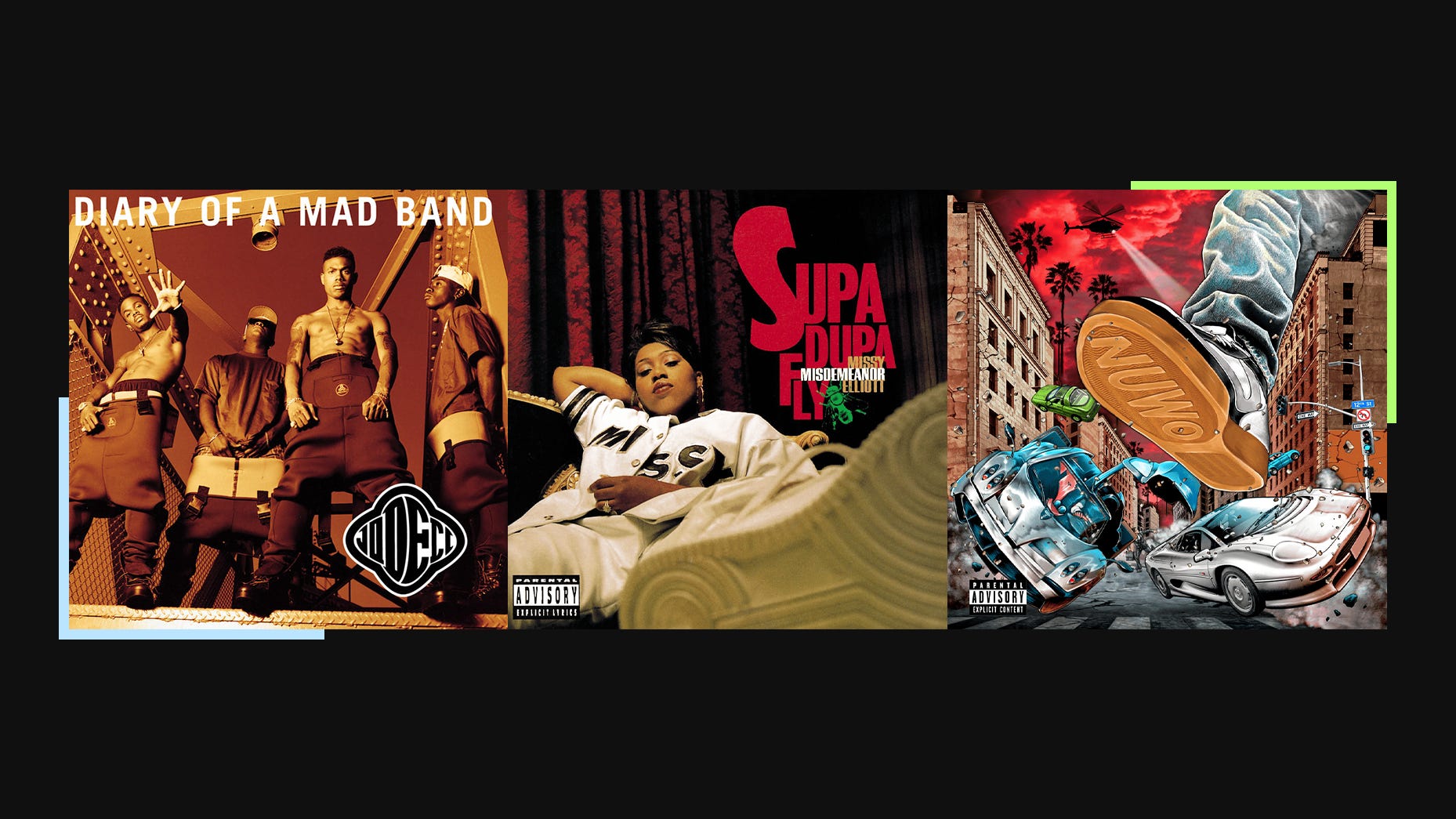
If Jodeci sang with the fire and brimstone of the Old Testament, threatening to bring the house down with their horny harmonies, then Sonder soothes with the cool, calm conviction of the New Testament, heralding in a new chapter in the gospel of R&B. That transition is Da Bassment’s legacy.
Without Da Bassment, T R A P S O U L, and the sub-genre that followed, does not exist. Without Da Bassment, OVO Sound and its resounding regional influence does not exist. Without Da Bassment, trailblazing artists like Kehlani, Syd, and Victoria Monét do not exist.
Like the best songs, one can look back at all of this and see nothing more than a series of coincidences but, if you read between the lines, you’ll find something more akin to divine design.
Further Listening
[1] Da Bassment Cru, Da Bassment Demo Tape (Discovered By Static Major Is Music & Curated By Confessions Of A Curly Mind)
[2] Sonder, Show #324, Soulection Radio
Further Reading
[1] Lauren Du Graf, The Gospel Of Jodeci, Oxford American
[2] Erin Scherer, The Show, The Afterparty, Da Bassment, 585 Magazine
[3] Natelegé Whaley, ‘Aaliyah’ 25: 14 Modern R&B Songs Inspired By Aaliyah And Static Major, Scene Serene
[4] Chris Williams, Origin Stories: Missy Elliott and Timbaland, Red Bull Music Academy
 | A guest post by
|